
What next for artificial intelligence?
Several headlines have given the stock market cause to be nervous in recent weeks. Anthropic’s Initial Public Offering, which is scheduled for 19th November, has tussled with the revelations about Jensen Huang for space on the business pages, and the market is both enthusiastic and cautious about what could be the biggest IPO ever. The enthusiasm about AI is clear given its potential benefits, but concerns over several factors have contributed to the sell-off of up to 25% in some AI-related stocks across the world.
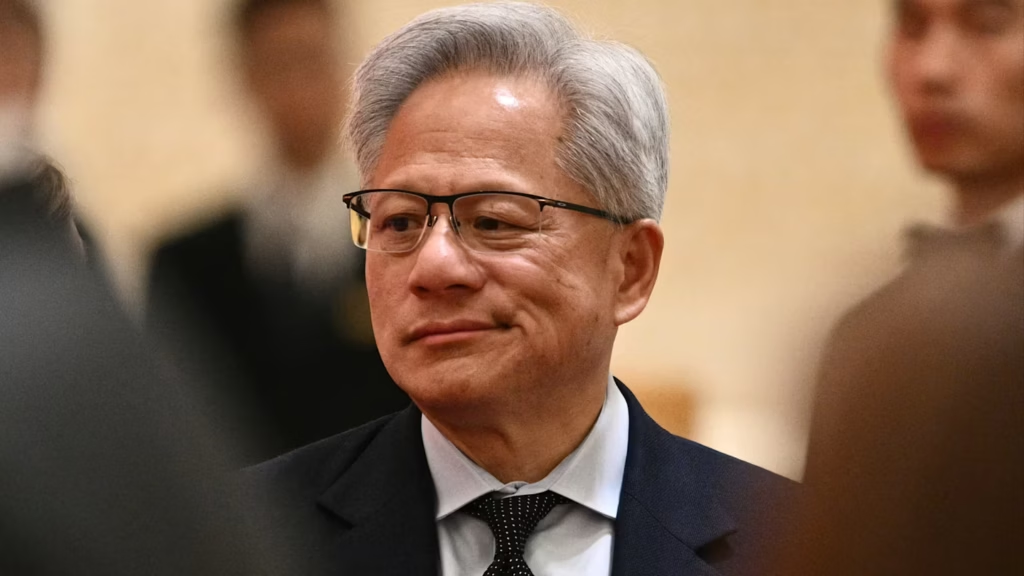
One factor attracting considerable attention is the story, and departure, of Nvidia’s founder and long-serving chief executive Jensen Huang. Huang transformed Nvidia from a manufacturer of gaming graphics processors into the leading producer of specialised AI chips, known as data-centre accelerators, helping make it one of the world’s most valuable companies. Investors are concerned about how dependent Nvidia’s future success is on Huang’s leadership and long-term vision.
Huang also reinvested Nvidia profits in over 100 companies involved in related fields including AI infrastructure and cloud computing. These investments were important as they gave credibility and helped fund purchases of Nvidia chips. Huang committed Nvidia to invest $10bn in Anthropic, helping anchor the IPO. Investors worry that without Huang’s leadership, Nvidia may not play such a significant role in supporting AI’s ecosystem in the future.
The circular nature of AI is illustrated in Anthropic’s recently filed IPO documents. The filing warns that Microsoft, Alphabet, Amazon and SpaceXAI are major suppliers of compute to Anthropic, and notes that these companies are also among Anthropic’s biggest competitors, with each developing its own AI models. They also distribute Anthropic’s Claude AI model through their cloud platforms, giving them insight into key Anthropic commercial information such as customer relationships and pricing. Combined with competition from both the US and abroad, this creates a highly competitive landscape, making Anthropic’s future profitability difficult to predict and forcing it to continue investing heavily.
The Nvidia investments in Anthropic and other companies illustrate what some investors view as the interconnected nature of AI companies – the companies supply, finance, invest in, and compete with one another, creating a boom ultimately backed by a relatively small group of firms. This could make the AI ecosystem fragile, as a slowdown in cashflows could expose multiple companies simultaneously.
The Anthropic listing documents created considerable excitement as investors received a detailed insight into the company’s finances. The IPO is forecast to raise about $90bn, which could make it the largest flotation ever, eclipsing SpaceX’s IPO earlier this year. The documents confirmed Anthropic’s rapid growth, with sales of $17bn in the third quarter of 2026, up 1,127% year-on-year, and estimated annualised revenues of about $70bn.
The documents also confirmed Anthropic has committed to spend $900bn mainly on non-cancellable lease agreements for data centre compute, illustrating the enormous computing capacity required by AI and highlighting the increasing capital intensity of the tech sector. These commitments are to Microsoft, Alphabet, Amazon, SpaceXAI and other providers. While the commitments extend to 2040, $451.6bn is due before 2030.
Anthropic is a leader in its field, but it remains in the early stages of its growth with estimated annualised revenues of about $70bn, and it is not yet cashflow generative. The company holds about $130bn of cash and short-term investments at present. If the IPO raises the expected $90bn-$95bn, the company could emerge with well over $200bn of liquidity on its balance sheet. Even then, its liquidity would cover only a portion of its long-term contractual commitments. The high level of lease commitments makes it important that Anthropic continues to grow quickly to generate sufficient cashflow to meet its lease obligations. If it cannot, the resulting cashflow shortfall could ripple through a large part of the AI ecosystem.
Anthropic needs to generate profits quickly, but the broader question is whether AI models more generally can generate sufficient returns to justify the hundreds of billions being spent on chips, power and data centres. Revenue growth has been extraordinary, but the long-term economics of the industry remain uncertain. Indeed, supply constraints have driven much of the recent sell-off in AI stocks. Investors must determine whether AI will become a high-growth driver of returns or whether it will become part of our infrastructure, earning utility-like returns. The changing behaviour of the leading tech companies illustrates why this question has become important.
The market seems to be concerned about the changing nature of America’s leading tech companies such as Microsoft, Alphabet, Amazon, Meta and Oracle. These hyperscalers seem to be businesses in transition with an uncertain outcome. Historically, these tech companies did not invest much in property, plant and equipment, which helped them generate substantial free cashflow. Increasingly, however, they are investing heavily in data centres, the infrastructure underpinning AI. In doing so, they are becoming more utility-like, potentially diluting the economics of their core software businesses.
The AI build-out is highly capital intensive and partly, but not entirely, financed by the free cashflow generated by Nvidia and the hyperscalers. These companies and many related businesses have taken on significant amounts of relatively cheap debt to fund expansion. This makes them sensitive to interest rates, which at present could rise if the Federal Reserve steps in to cool inflation pressures. If rates do rise, it could make it more difficult and expensive to raise finance and increase risk across the AI sector and put pressure on valuations.
Another source of concern is whether support for AI from the American political system is weakening. President Trump and his Republican colleagues were strong supporters of the AI build-out. This changed with the midterm elections when 40 of 41 local ballot measures opposing data centre development were approved by communities. The elections also saw many politicians raise concerns about the impact of data centres on living costs, electricity prices, water consumption and the environment. What was once largely a planning issue has increasingly become a political one, adding to the list of supply constraints on AI’s expansion.
Despite the worries and headwinds mentioned, the potential of AI is untapped and the revenue growth at the AI companies continues to be extraordinarily high. Adoption is low at present but looks set to accelerate as end users research ways to use AI. Most of the issues outlined above are on the supply side – demand for existing AI infrastructure remains very strong, suggesting current data centre providers are likely to remain lucrative in the near term, although the longer-term economics of future capacity additions remain uncertain. Despite the huge financial commitments, the major players in AI, such as Nvidia and the hyperscalers, remain financially strong, which should enable them to weather any temporary setbacks.
The Anthropic IPO represents an important test of investor confidence in the next phase of AI development. A successful listing could demonstrate that investors remain willing to fund the substantial capital requirements associated with frontier AI and could help restore momentum across the sector. A weaker reception would likely intensify debate about valuation, capital intensity and long-term returns. Either outcome, however, is unlikely to alter the broader investment case that the United States remains the centre of global innovation and the most important equity market for long-term growth investors.
Please be aware that the value of investments may go up or down and you may receive back less than you invested originally. Past performance is not a guide to the future.
This document contains general information only and does not provide any advice or guidance specific to your personal circumstances.
Callanish Capital is authorised and regulated by the Financial Conduct Authority to manage investments and authorised to provide advice on investments, pensions, credit, protection and mortgages.
This email and any accompanying attachment are issued by Callanish Capital Ltd, a company registered in England and Wales under company number 13182424. Registered Office: 45 Pont Street, London, SW1X 0BD.
Callanish Capital Ltd is a Discretionary Fund Manager, directly authorised and regulated by the Financial Conduct Authority (“FCA”) under registration number 955992.